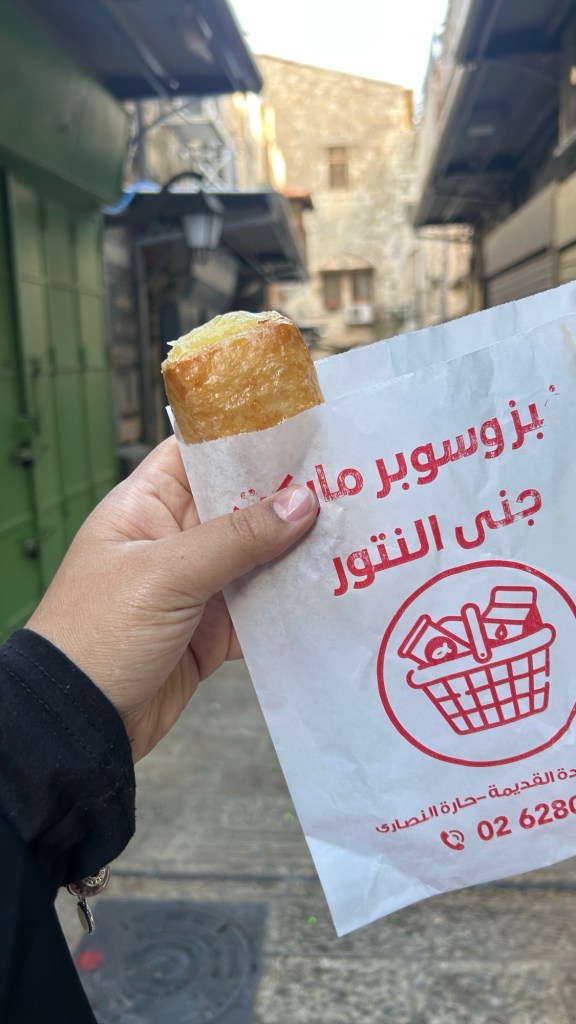
This morning we read Fajr in the room and then we went back to sleep until breakfast. I got ready and then I went downstairs to the basement and found Uncle Hisham preparing breakfast for everyone. I went to buy some extra rolls and hummus at a bakery around the corner and ended up having the BEST custard danish of my life. 10/10 – chef’s kiss – wow, just wow. It was from Tannour.
All the South Africans in the hotel had breakfast together and afterwards, we went up to the roof to admire the view. After a bit, we came down, got our parents, split into two groups and walked to the masjid.
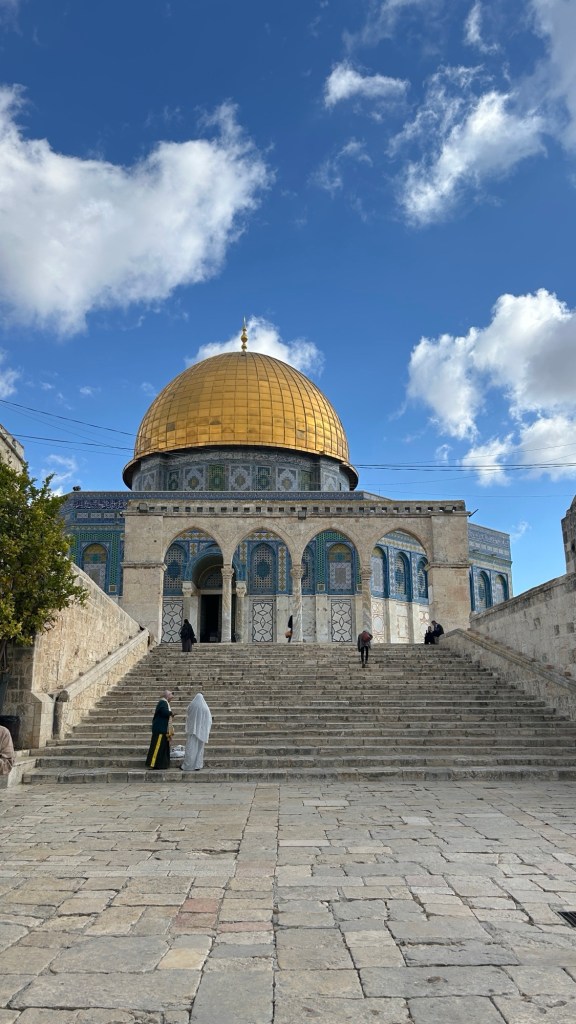
We walked to the gate, the guard let my dad and I in without even checking our passports or anything. But they stopped my brother. My sister and mom also got in immediately.
We were taking some pictures of Qubbat as-Sakhra when my brother came up to us. He explained that when he was turned away, he started walking to a different gate and asked some guards where is Al-Aqsa, they pointed to the gate he had come from. He told the guard that the guards at the gate said no. The guard said come with me and took my brother himself to the gate and allowed him entry.
For jummah salaah, only women are allowed to pray in Qubbat as-Sakhra. We found a space for us near the rocks and waited for jummah for the next two hours.
We prayed jummah salaah and then went down to meet our South African group for a walking tour in the compound. Our guide Abeer has a PhD in Archeology.
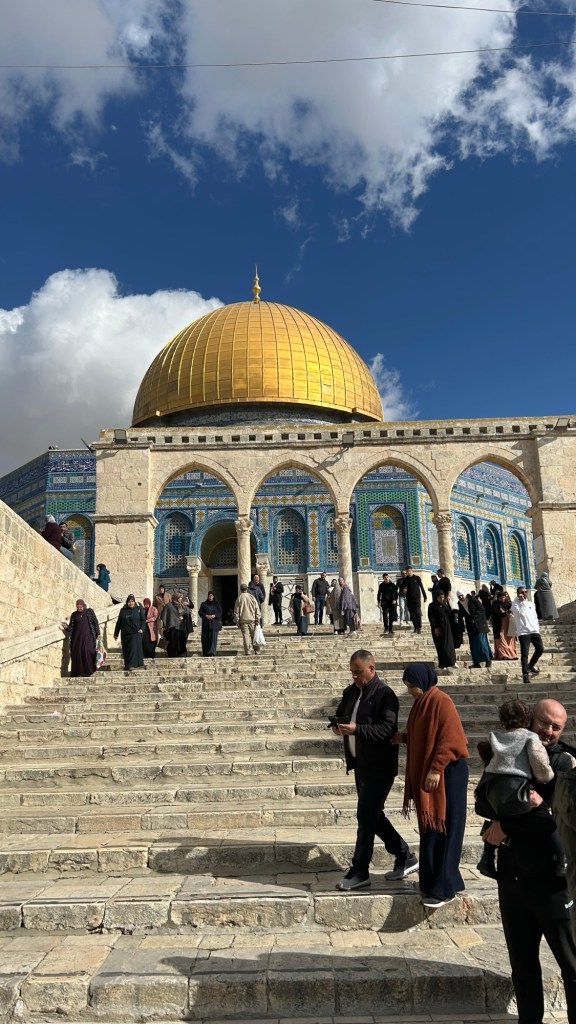
It is important to note that Al-Aqsa is not a building and it is not one specific masjid – its land. So, it doesn’t matter where you pray. It’s all the same. Each inch is one of the prophets. When you move from one place to another, you are going from one prophet to another. Al Aqsa is also not a haram, it is a masjid. Aqsa means farthest.
She mentioned that we all own 1mm and on the day of Qiyaamah, we will be questioned about what we did for our piece. At least, we can say we visited.
Our first stop was Al-Buraq masjid. Most scholars agree the ring that Nabi ﷺ tied the buraq to is in the wall, it is not something Nabi ﷺ himself could find easily as Jibra’eel A.S. had to show Nabi ﷺ where it was. It is also mentioned that this is one of the two places where Nabi ﷺ entered to go to the heavens on Mi’raaj. In 1929, the Jews tried to go into the masjid. People from all over Palestine came to protest especially women and this was called Al-Buraq revolution. It is important to call the wall Al-Buraq wall, not Western Wall or Wailing Wall.
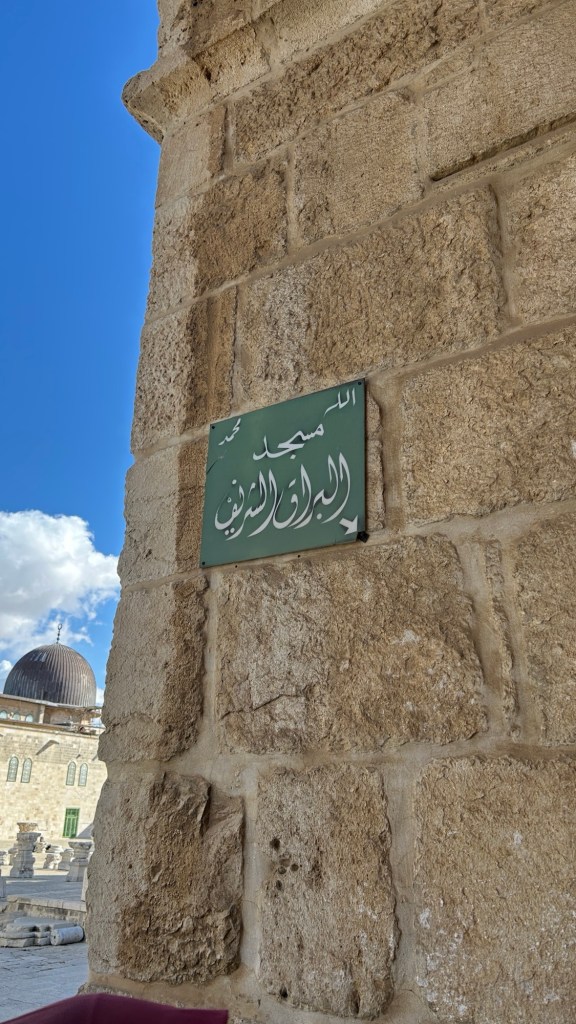
The next stop was the Qibli Masjid. The reason it is called the Qibli Masjid is because this building is the closest point to the qiblah today. When Nabi ﷺ prayed salaah with the other 124 000 ambiyaa, Al-Aqsa was a piece of land with no buildings. Sayyidina Umar R.A. was the first person to build a building here, it was from made from wood and could occupy 3000 worshippers.
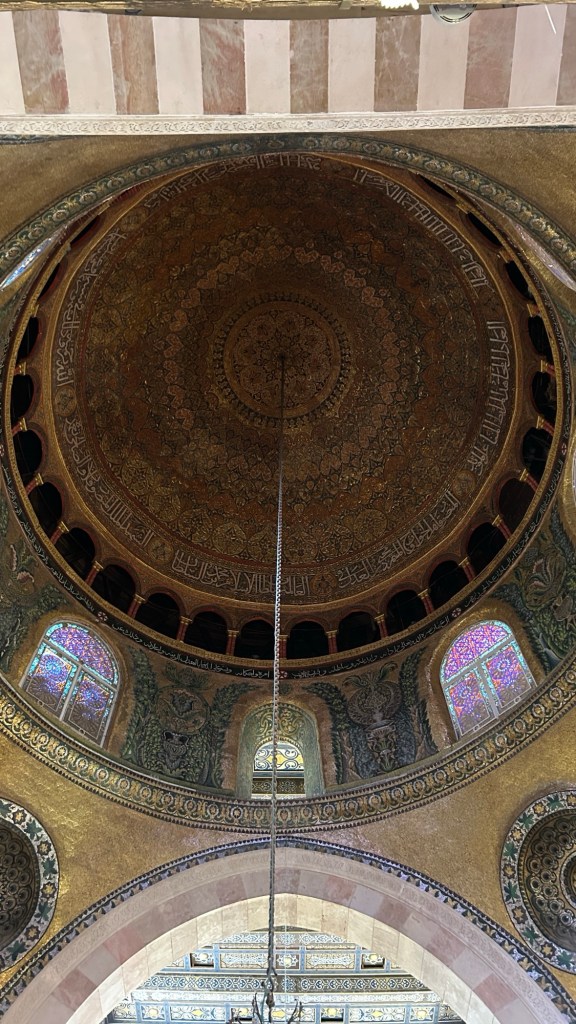
The Qibli masjid as we know it today was first built by the Ummayad Khalif – Abdul Malik Bin Marwaan. He built the basement and the Dome of the Rock and when he passed away, his son Walid carried on the building.
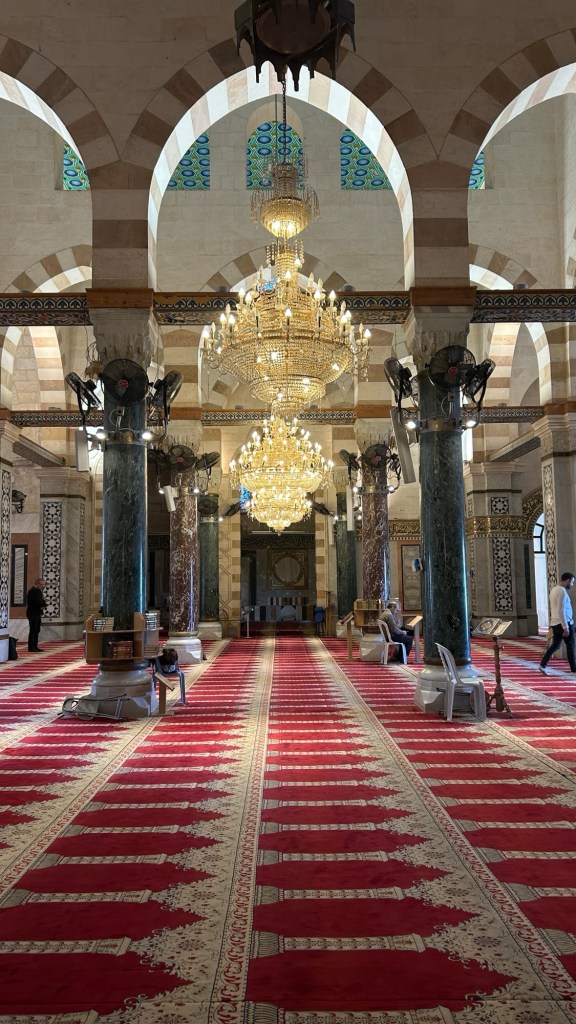
The next dynasty was the Abbasid, during this time, this building collapsed and the masjid was rebuilt again.
During the Fatimid dynasty, there was another earthquake and the building collapsed, at first the khalifah refused to build it but after a while, he rebuilt it.
In 1099, the Crusaders arrived to Jerusalem. They killed between 40 000 – 70 000 people. They changed this building to be a hostel for priests and called it the Night Temple. It remained like this until 1187 when Salahuddin Ayyubi liberated Jerusalem and began renovating the masjid to its former state. He took out the walls the Crusaders built but left the chapel. Salahuddin Ayyubi’s name was Yusuf. He inscribed a message on the Mehraab. His Mehraab was made entirely out of wood and used no nails. The Mehraab remained as he left it until 1969 when a man came after fajr, started a fire and they didn’t allow the firemen to come and put it out. The Mehraab was destroyed and a replica was made. The man was arrested but they let him go saying he was crazy.
Al Qibli masjid has an additional building that was built by the Sufi’s, this area is called a Zaawin. In 2020 and 2023, the guards entered, destroyed the clinic and they arrested hundreds of youth. There is no longer a clinic here.
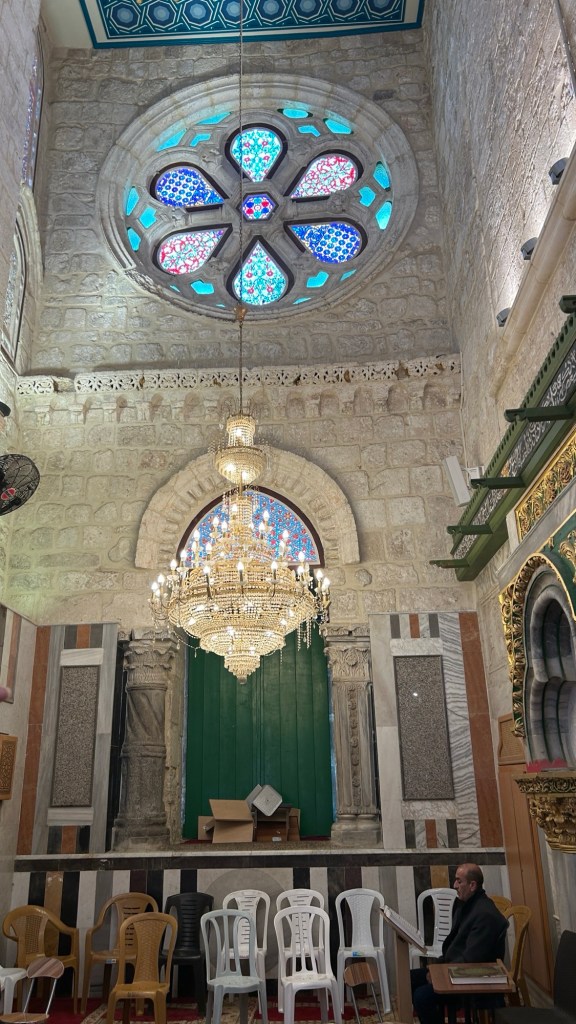
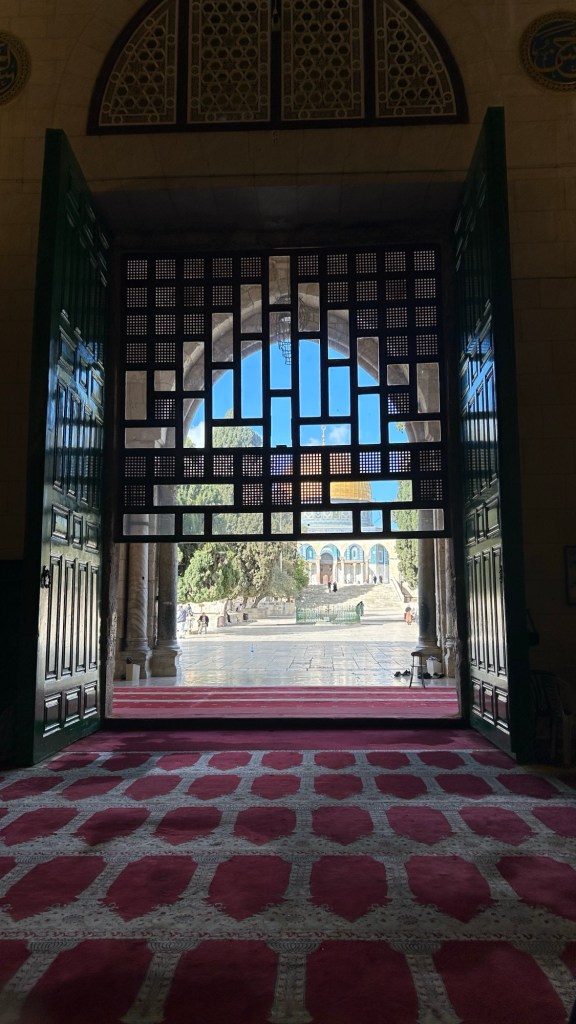
The next masjid we visited was Old Aqsa mosque. Abeer reminded us that names does not mean facts. Old Aqsa mosque is a basement and it was built by Romans. The stones and columns go back to those times. Some say this is the gate was where Nabi ﷺ entered to mi’raaj. Isa A.S. also passed through this mosque and so did Nabi Zakariyya A.S., Nabi Yahya A.S. and Sayyiditina Maryam A.S.
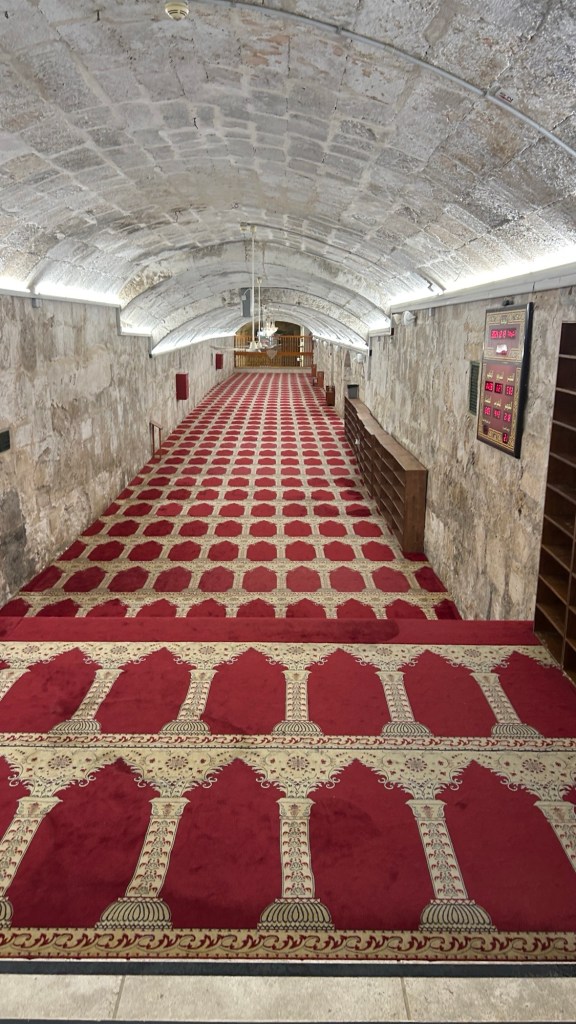
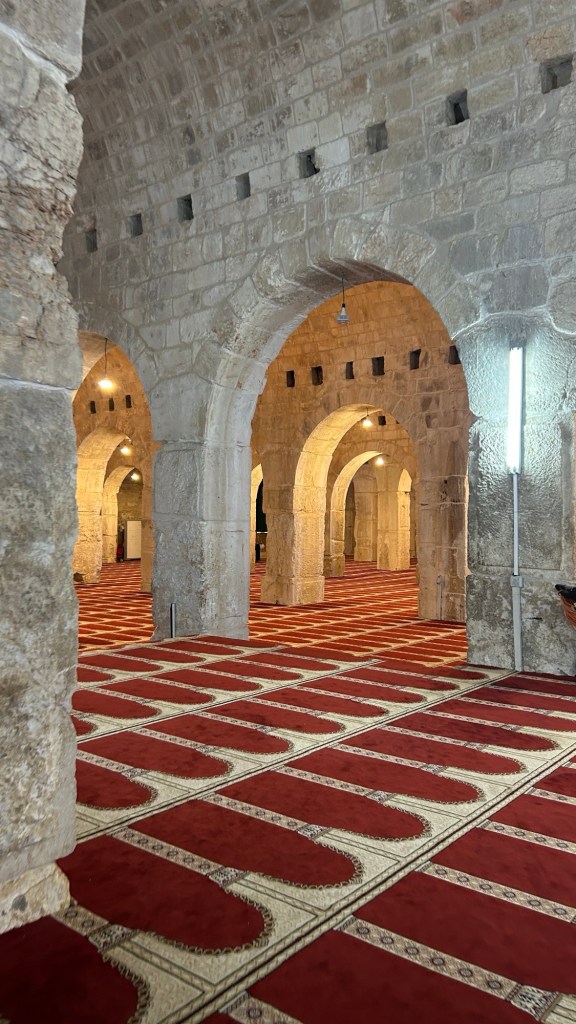
The next stop was Marwaani Masjid. It’s called Marwaani Masjid because it was rebuilt by Abdul Malik bin Marwaan. Marwaani Masjid has the biggest basement that people are allowed in in Al-Aqsa.
Because Salahuddin Ayyubi was scared of other people coming into Marwaani Masjid, Salahuddin closed all the gates and hid it. No one came here for 800 years. In 1994, they wanted to turn this place into a synagogue. Palestinians came from all over and began to fix the place and made entrances here. The people paid for everything, they didn’t wait for any government or any person to help them. Abeer mentioned that the people are willing to give their lives for the mosque, not just their money.
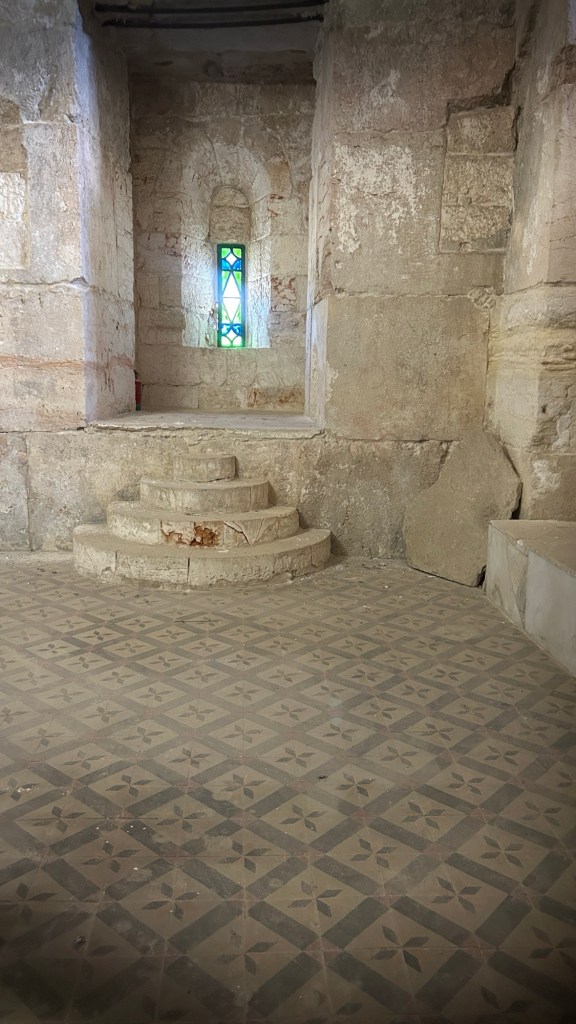
Marwaani Masjid holds Mehraab Maryam. This is the room where Sayyiditina Maryam A.S. sat inside of it and worshipped Allah Ta’alah. There is no certainty that this was where she sat but it’s a great possibility that it is since it’s on the eastern side of her family’s house.
The walls we see today around the city are built by the Ottoman.
The next stop was my favourite masjid of all. Qubbat as-Sakhra. There are two sun dials in the mosque, if you look at it, you can see the time. You can also still see bullet holes in the exterior of the masjid which are from the shooting of 1990.
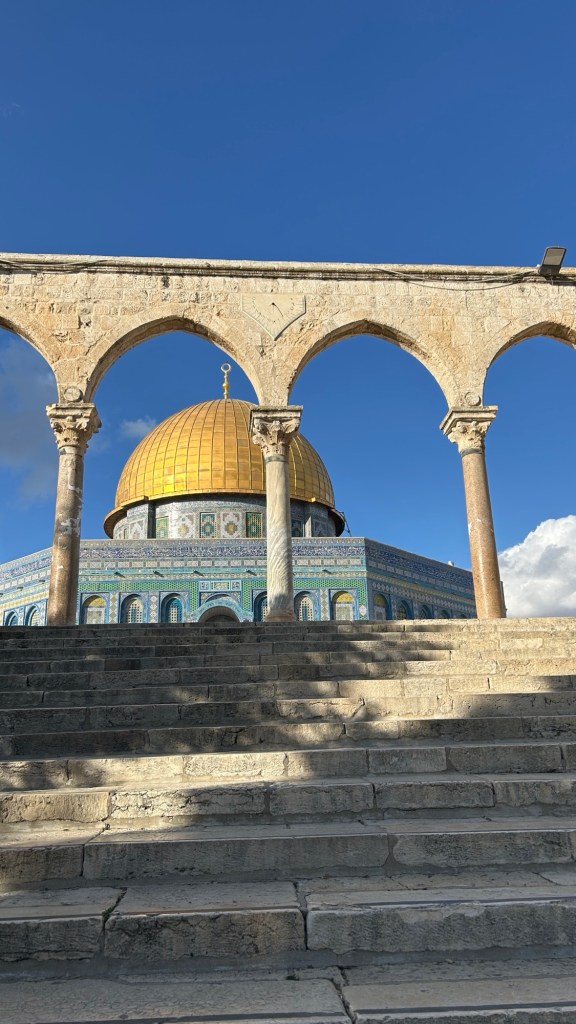
Abeer says that if she closes her eyes, she can still hear the people crying and she can still hear the Imaam calling for help. The Imaam was calling the athaan of Jihad, the athaan of jihaad is when it’s not the time of salaah and the athaan is called. Instead of saying hayya alas salaah, they call out hayya alal jihaad.
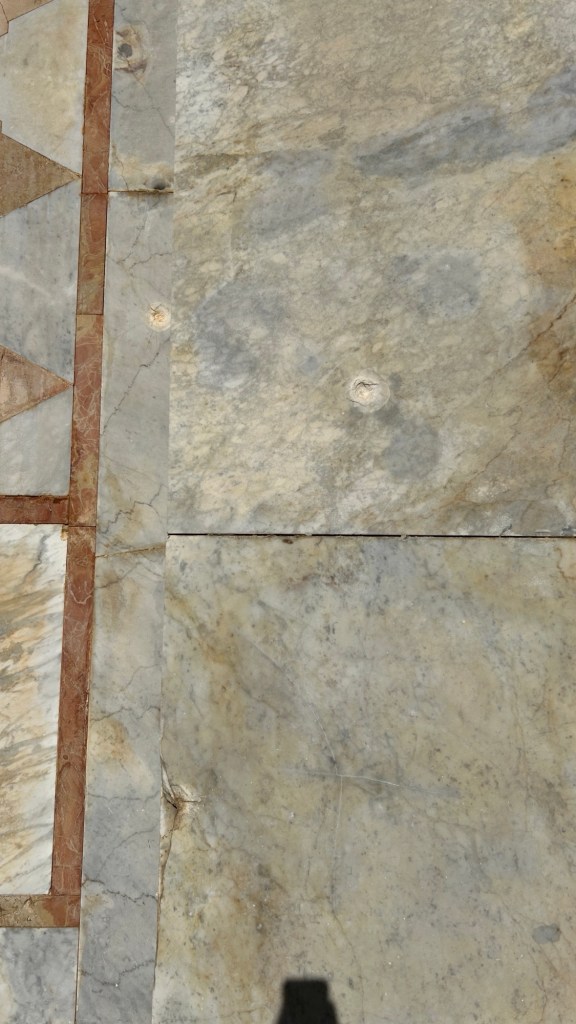
In 2000, there was two youth (Ibraheem and Amjad) standing on the dome of the rock. They started shooting at the two boys – bullets hit ibraheem’s head on the outside but didn’t go in. His family took him home and then he remembered about his friend. He called his friend and someone answered his phone saying please come because he is dying. They go there, take him to a hospital and then he’s in a coma for 2 months. Today, Ibraheem and Amjad are both alive and well and are married and have kids. The lesson of the story is that when it’s not your time, not even 12 bullets can kill you.
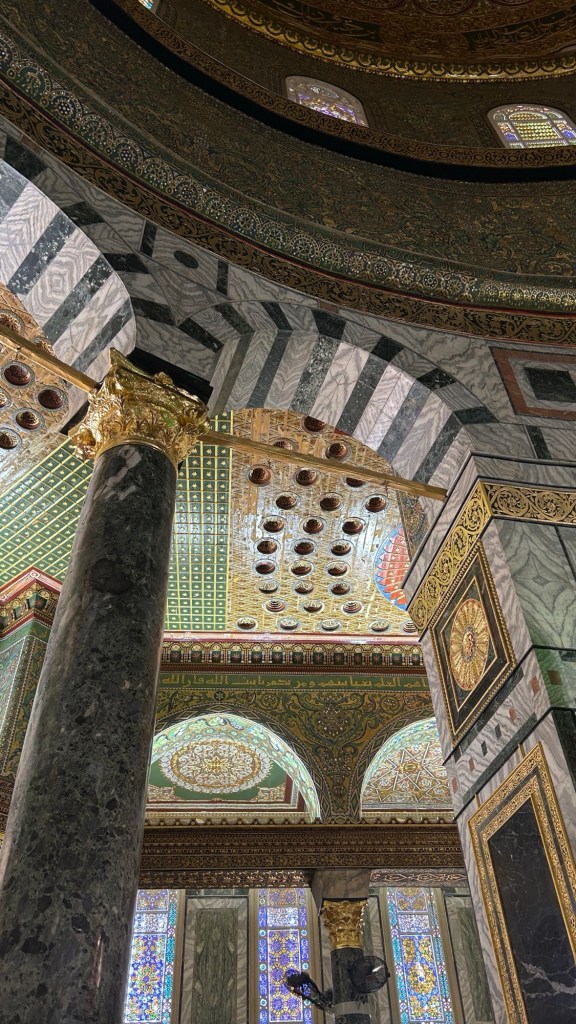
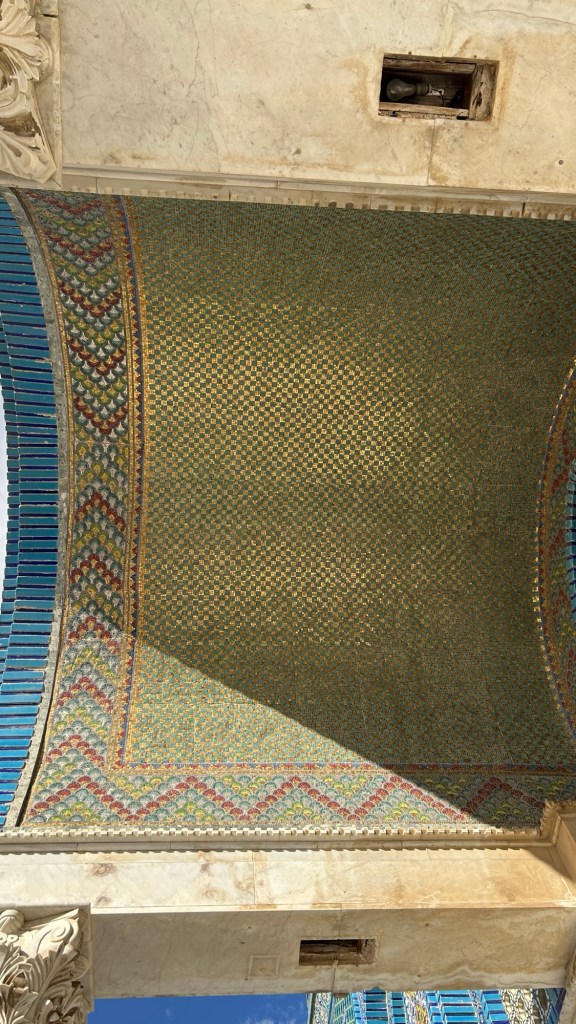
The mosaic on the arch used to be the entire dome of the rock. The gold is real gold. Qubbat as-Sakhra is the oldest Muslim building. It was built by Abdul Malik bin Marwaan in 71 AH. It has been preserved so if you travel through time – it will look the same.
The Qubbat as-Sakhra is an Octagon. The eight points represent the eight angels holding the throne of Allah. There are four doors which represents the four seasons of the year and the four weeks in the month. Each entrance has five columns and we have five pillars of Islam and we pray five times a day. There are fifty two windows which represent the fifty two weeks in the year.
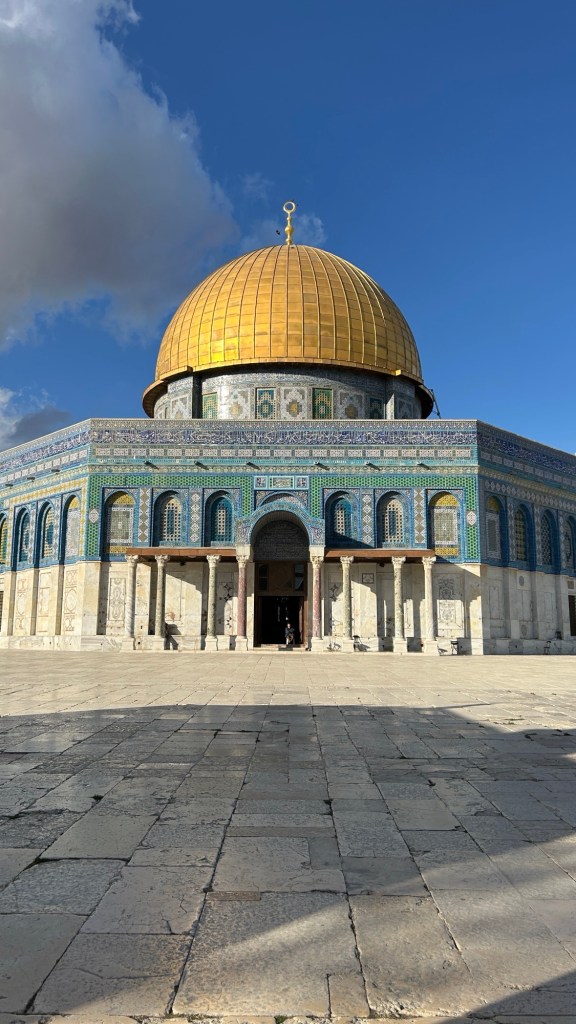
The Qubbat as-Sakhra is the highest point of the mountain. It is the first qiblah. It was the direction of prayer when Nabi ﷺ led the salaah of all of the ambiyaa.
The mosaic on the arches is 1km, it is a mix of different arts which come together to be Islamic art. Initially, the Qur’aan was read without any dots, the dots were added by Abdul Malik bin Marwaan. Shoutout to my little nephew and my bestie, Mohammed Taha because Surah Taha is written on the inside of the Qubbat as-Sakhra.
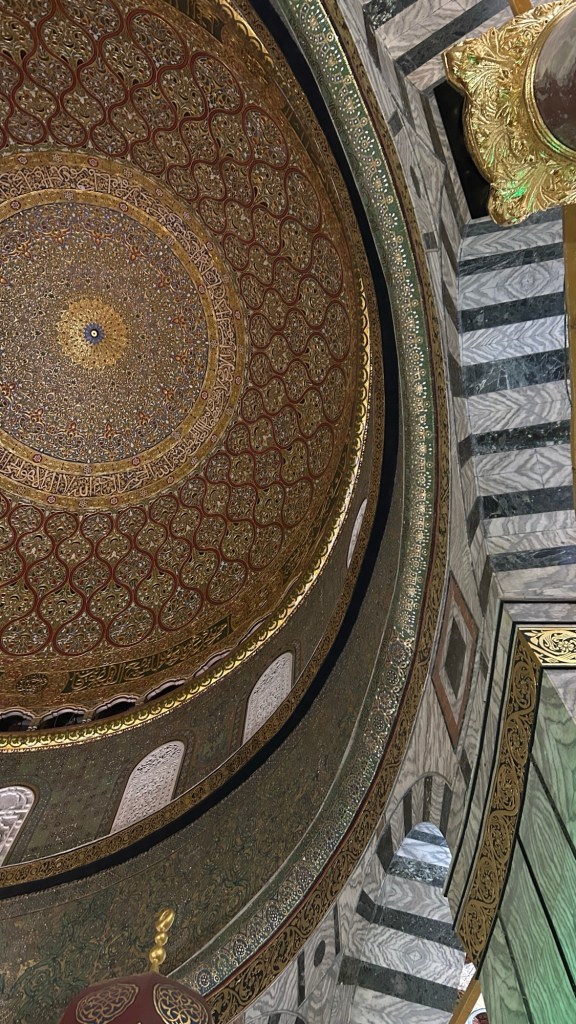
There is a stone in Qubbat as-Sakhra where people touch it – to touch the stone for barakah is Shirk Billah, the smell that emanates from the stone is from the perfume the cleaners use to clean the rock.
The cave in Qubbat as-Sakhra is a natural cave and the highest point of the mountain. There are two caves in Al-Aqsa – this is the only one open to the public.
As we finished our tour with Abeer, the athaan for asr went, we read salaah and then decided to go back to the hotel for lunch because we were starving at this point.
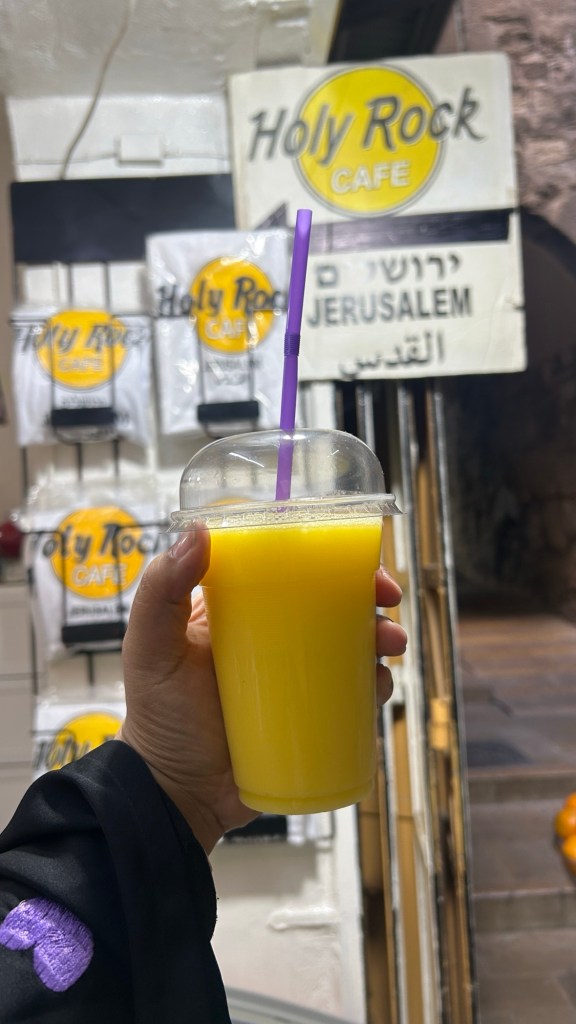
I found the best corn crisp on the way and we had the tastiest pomegranate and mango juice at Holy Rock Cafe. Then we had some chicken biryani for lunch and went to the room to rest for a bit.
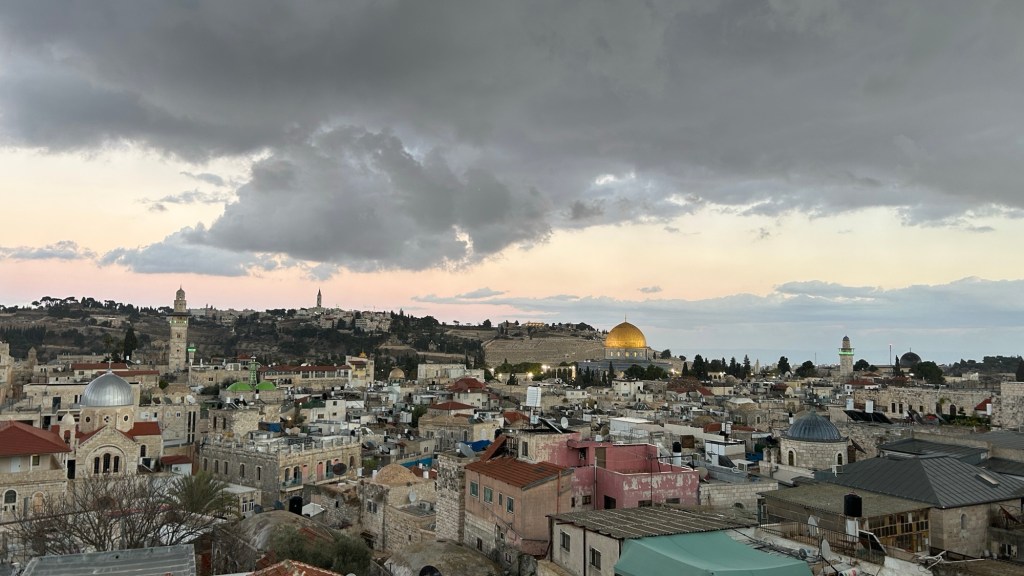
After freshening up, I went up to the rooftop to see the sunset and then ran down to catch Maghrib in Masjid-ul-Aqsa.
It started to drizzle around this time and there’s just something special about the way the rain looked in the masjid.
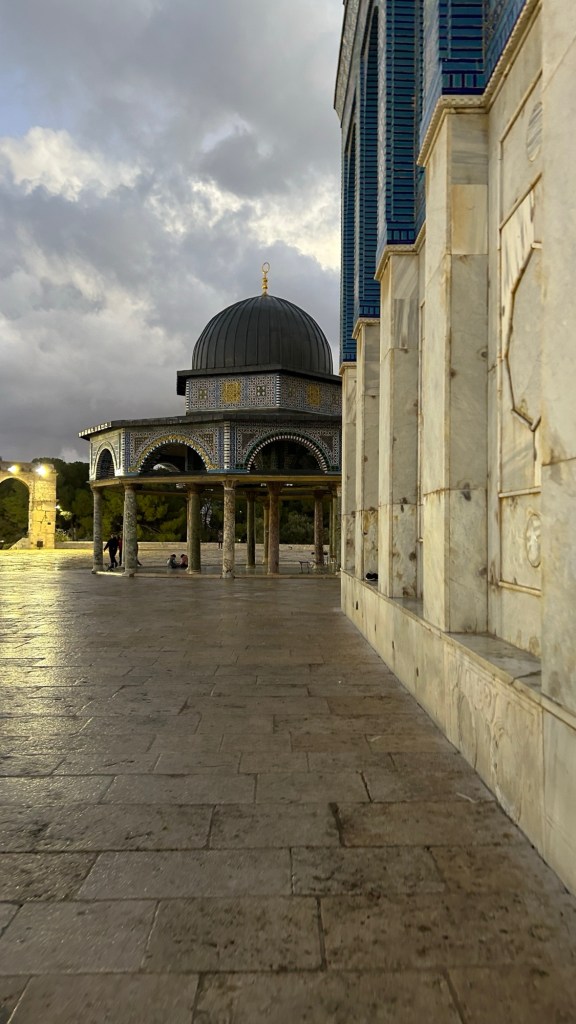
We read Maghrib and Esha in Qubbat as-Sakhra. Then we met our guide, Abu Saleh to plan our tours for the next day.
On our way out of the masjid, Abu Saleh showed us the grave of Mohammad Ali Jauhar, an Indian Muslim activist and major political figure and the King of Jordan, Hussein. He also told us that Al-Aqsa masjid is 100 414m.
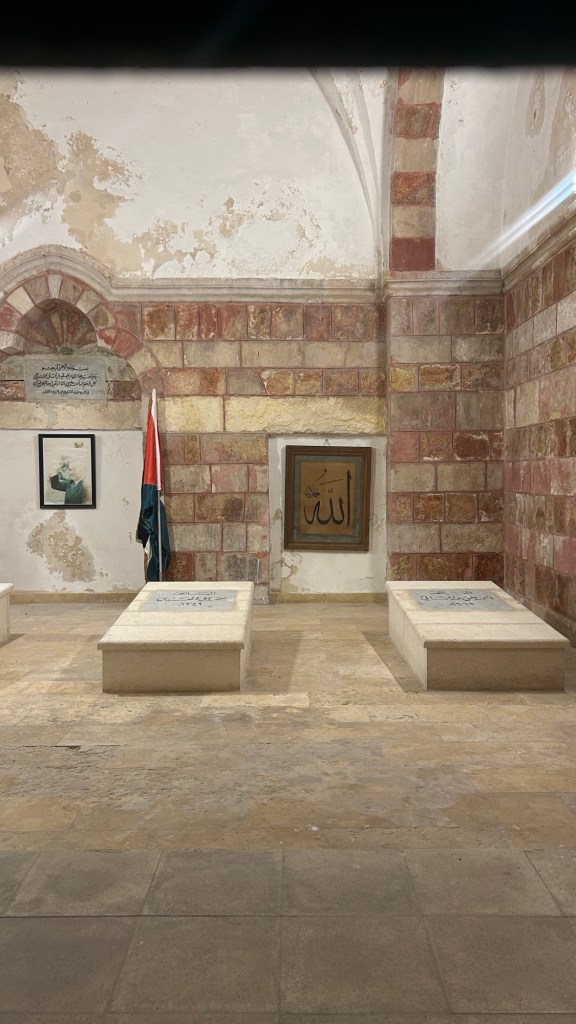
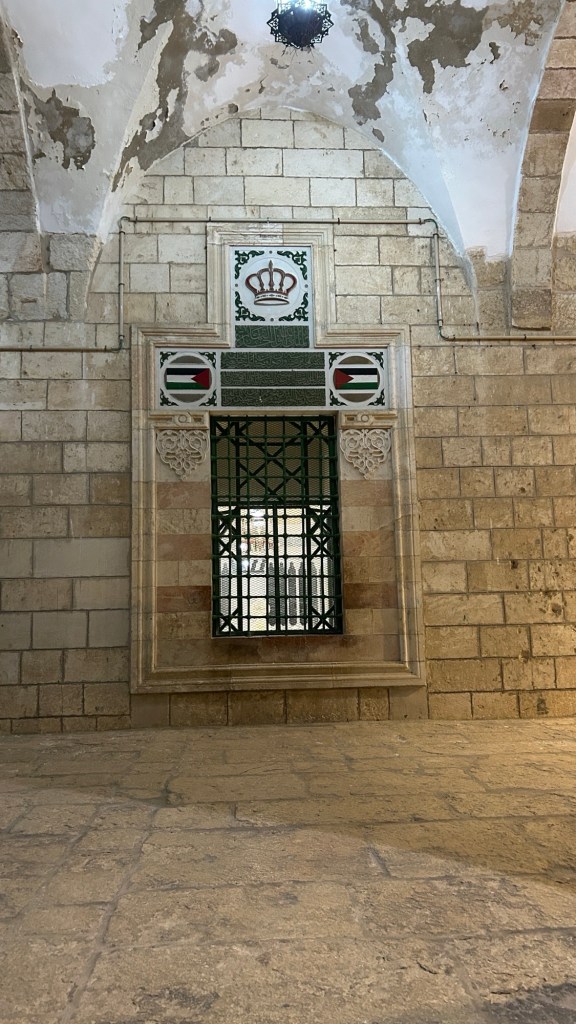
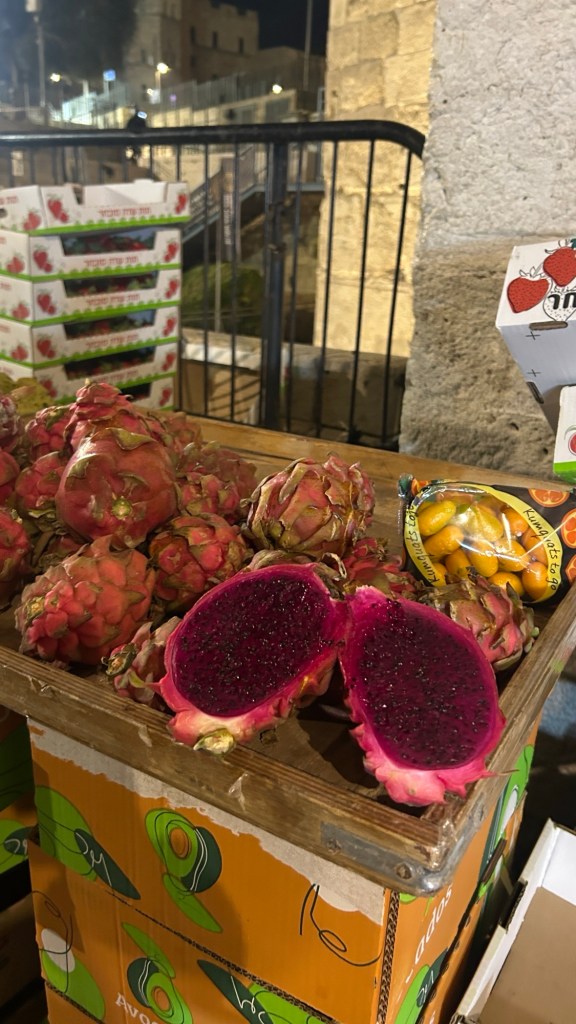
He then pointed out the best places to buy kunafe and hummus and then directed us to outside Damascus gate for the best schwarmas. We also found a fruit vendor selling some dragonfruit.
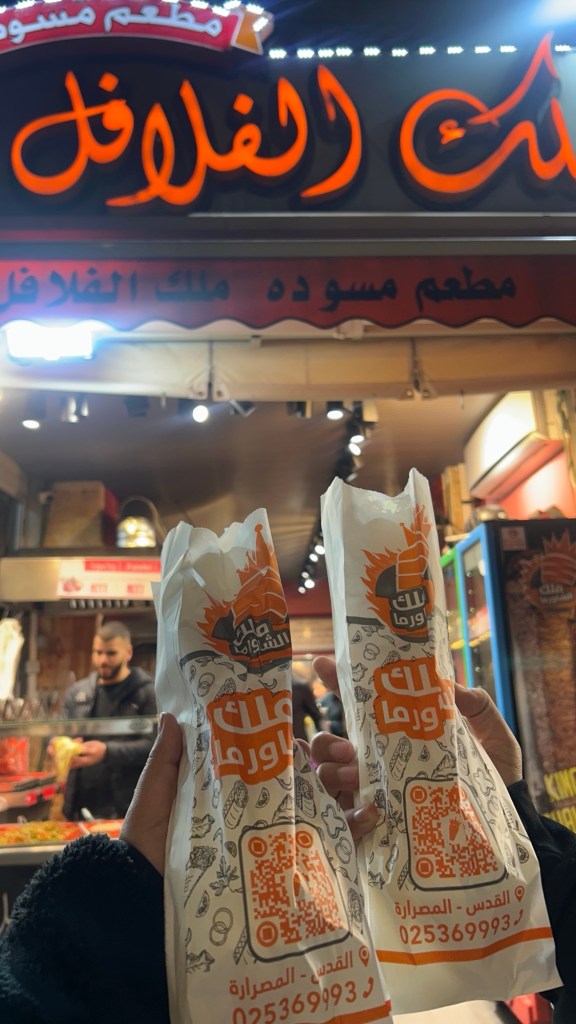
We took the schwarmas back to the hotel and found that he was not wrong, the schwarmas were 10/10. The dragonfruit was a 10/10 dessert after.
After the long day, we jumped into bed to recharge for the next day of Ziyarah.
Please note: the only graves that we are 100% sure of is the graves of Nabi ﷺ, Sayyidina Abu Bakr R.A. and Sayyidina Umar R.A., all the graves we see throughout this trip – Allahu ‘Alam – Allah knows best. Also, all the various theories that are mentioned have multiple versions and not all is fact – once again, Allahu ‘Alam – Allah knows best.
Step count: 14 342
 Purple Clouds Blog